



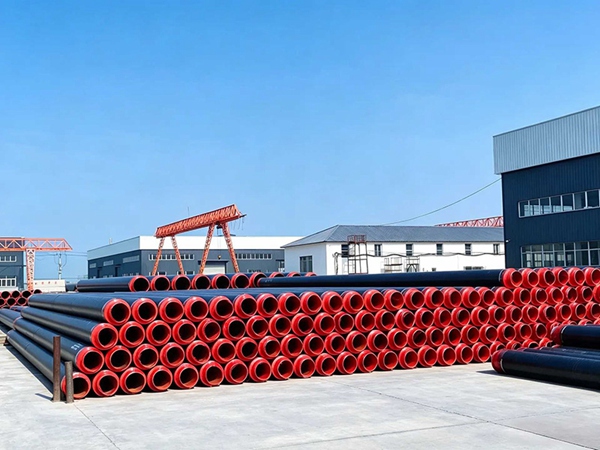
Polyurethane Insulated Steel Pipe
Pre-insulated polyurethane foam steel pipe produced by Cangzhou Jinyang Pipeline Manufacturing Co., Ltd. for district heating and cooling networks with thermal insulation....
1) Confirm medium temperature, working pressure and laying method (direct burial or above ground); 2) Insulation thickness and density follow the heat-loss calculation; 3) HDPE is the usual outer casing, with alternatives for corrosive ground; 4) The joint insulation system must match the main pipe.
| Product type | Structure / features | Typical application |
|---|---|---|
| Polyurethane insulated pipe (PU) | Working pipe, PU foam insulation and outer casing, usually HDPE | Direct-buried heating, hot water transmission and heat networks |
| Steel-sheathed steam insulated pipe | Working pipe, insulation structure and outer steel casing | Steam networks and high-temperature heat projects |
| FRP-cased / above-ground insulated pipe | FRP or metal casing selected for the corrosion environment and laying conditions | Corrosive ground, above-ground laying and industrial lines |
Polyurethane insulated steel pipe consists of a working pipe, rigid PU foam insulation and an outer casing. The foam is poured or injected in a mould or pipe-in-pipe process, forming a continuous insulation layer that limits heat loss. The outer casing is usually high-density polyethylene, providing both waterproofing and mechanical protection.
It is mainly used for direct-buried heating, hot water transmission and related heat networks. In direct burial, the casing resists soil and groundwater attack, and insulation and sealing at the joints are what keep the whole line at the designed heat-loss level.
Selection should confirm medium temperature and pressure, insulation thickness and density, casing material and wall thickness, laying method and burial depth. Delivery checks cover foam density, thermal conductivity, casing tightness and overall appearance; store and handle without prolonged exposure to sun or impact.